
Concept of the internal Structure of the Earth
The Earth third planet in the solar system after Mercury and Venus. It is the only planet where life abundantly exists.
The earth’s structure is composed of two parts: internal and external. The internal structure sometimes referred to as the inner zones consists of three concentric layers: crust, mantle and the core. These layers are classified based on the density of their rock.
CROSS SECTIONAL VIEW OF THE INTERNAL STURUCTURE OF THE EARTH
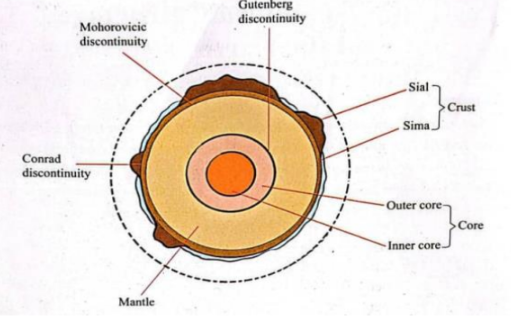
CONCENTRIC ZONE OF THE EARTH
The inner zones of the earth constitute the internal structure of the earth. The inner zone / internal structure of the earth consists of three zones or layers which are:
1. Crust
2. Mantle
3. Core
1. CRUST
Is the outermost and thinnest zone of the earth which found between 8 – 50 km or 5 – 30 miles. It is known as Lithospere, It is largely composed of igneous rocks. Other types of rocks also exist as a result of changes on the earth’s surface. The rocks are crystalline, hard and brittle. Bacause of being brittle they tend to break when subjected to stress or forces especially the compressional forces. The crust also consist of two layers are sial and sima layers. SIMA and SIAL are separated by the layer called
Conrad discontinuity.
a) SIAL
Is the outer layer of the crust which rich in silica and Aluminium minerals. The sial for the basis of the continent. The presence of silica and aluminium minerals collectively form SIAL layer.
a) SIMA
Is the layer which found beneath the sial. It is the inner layer of the crust which separated from sial layer by the zone called Conrad discontinuity line. The sima layer is composed by silica and magnesium. It forms the basis of ocean floor.
Note: Sial and sima layer together forms the crust.
2. MANTLE
Mesosphere or mantle which found between the crust and core. It lies beneath the crust. Mantle separated from the crust by the layer called Mohorovic discontinuity or moho, named after the seismologist Andrija Mohorovicic, who discovered it in 1909. It extends downward from 51 kilometeres to about 2900 km (1800 miles) where the temperatures may reach about 50000C. It consist of pale green minerals called Olivine (Ferromagnesium silicate) in form of ultra basic rock.It consists of lower and upper mantle. The upper mantle is rigid and crust to form a large layer called lithosphere.
The lower mantle is less rigid and forms the moltern layer within the earth’s interior called asthenosphere. Asthenosphere is the molten layer layer which responsible for the balancing movement of the earth’s material called isostatic readjustment.
Asthenosphere has been investigated is found between 100 to 200 km below the upper surface.
3. CORE
The core is the innermost zone of the internal structure of the earth. It is also called barysphere. It has diameter of about 6900 km (4300 miles) density of about. The core is also classified into two parts i.e. the outer and inner core. It is separated from the mantle by the layer called Gutenberg discontinuity.
1. The Outer Core
It is liquid in nature due to high temperature of up to 37000c, and consist of nickel and iron (NIFE) . It is estimated to be 2100 km with density of about 10.5 gms/cc.
2. The Inner Core is thought to be solid in nature because of high pressure exerted from different parts toward the center - It composed mainly by iron. It has diameter of about 2600 – 2700km. (1600 – 1700 miles)
THE ROLE OF EARTH’S INTERNAL STRUCTURE IN ROCK FORMATION ROCKS.
Are natural solid materials composed of various minerals in different ratios.
Or.
A rock is an aggregate of minerals in a solid state.
The rock cycle- refers to the process by which a rock transforms from one type to another. It differs in colour. Texture, density, mode of formation and resistance to erosion. They also vary in chemical composition, permeability and hardness. The crust drives the rock cycle through volcanic activity, erosion and plate movements, which form Igneous, Sedmintary Rocks and Metamorphic Rocks
Types of Rocks on the Earth’s Crust
Rocks of the Earth’s crust can be classified according to their mode of formation and chemical composition. According to the mode of formation rocks can be classified as classified as igneous, sedimentary and metamorphic.
1. IGNEOUS ROCKS
The term Igneous comes from the latin word Ignis which means fire. These are rocks that formed when molten materials cools and solidifies within or outside the earth’s crust. The origin of igneous rocks is inside the earth where they are under great pressure. Igneous rocks do not occur in layers and they don’t contain fossils. Igneous rocks solidify either within the earth‘s crust and form intrusive features or outside the earth‘s surface and form extrusive features.
Magma cools and solidifies within the crust while, Lava cools and solidifies on the earth’s crust.
Igneous rocks are formed when the molten magma is forced out from the upper mantle to the earth‘s surface, where it cools and solidifies due to low temperature. Crystals form on cooling and the rocks are called crystalline rocks. Instrusive igneous rocks
These are rocks formed when magma flows through vents or cracks, cools very slowly and solidifies before reaching the earth’s surface. The slow cooling process of magma within the Earth’s crust forms a large crystal, such rocks include granite, gabbro and Diorite. The intrusive rocks also known as plutonic rocks are dived into two types plutonic igneous rocks and hypabyssal intrusive igneous rocks.
1. Plutonic: these have solidified deep in the crust and they are seen on the surface only after being exposed by prolonged erosion.
2. Hypabyssal: these have been poured on the earth‘s surface where they are called lavas.
EXTRUSIVE IGNEOUS ROCKS
These are rocks formed on the Earth’s surface. They are also known as Volcanic rocks. They are formed when magma erupts and reaches the earth’s surface as lava, then cools and solidifies relatively quickly. Example of these rocks are Basalt, pumice and Rhyolite.
Characteristics of Igneous Rocks
1. Igneous rocks reflect light.
2. They are not found in layers.
3. They do not contain fossils.
4. They are crystalline rocks.
5. They are formed through cooling and solidification of magma.
6. They can undergo metamorphic and weathering processes.
7. They contain different minerals like iron, magnesium etc.
The Earth third planet in the solar system after Mercury and Venus. It is the only planet where life abundantly exists.
The earth’s structure is composed of two parts: internal and external. The internal structure sometimes referred to as the inner zones consists of three concentric layers: crust, mantle and the core. These layers are classified based on the density of their rock.
CROSS SECTIONAL VIEW OF THE INTERNAL STURUCTURE OF THE EARTH
CONCENTRIC ZONE OF THE EARTH
The inner zones of the earth constitute the internal structure of the earth. The inner zone / internal structure of the earth consists of three zones or layers which are:
1. Crust
2. Mantle
3. Core
1. CRUST
Is the outermost and thinnest zone of the earth which found between 8 – 50 km or 5 – 30 miles. It is known as Lithospere, It is largely composed of igneous rocks. Other types of rocks also exist as a result of changes on the earth’s surface. The rocks are crystalline, hard and brittle. Bacause of being brittle they tend to break when subjected to stress or forces especially the compressional forces. The crust also consist of two layers are sial and sima layers. SIMA and SIAL are separated by the layer called
Conrad discontinuity.
a) SIAL
Is the outer layer of the crust which rich in silica and Aluminium minerals. The sial for the basis of the continent. The presence of silica and aluminium minerals collectively form SIAL layer.
a) SIMA
Is the layer which found beneath the sial. It is the inner layer of the crust which separated from sial layer by the zone called Conrad discontinuity line. The sima layer is composed by silica and magnesium. It forms the basis of ocean floor.
Note: Sial and sima layer together forms the crust.
2. MANTLE
Mesosphere or mantle which found between the crust and core. It lies beneath the crust. Mantle separated from the crust by the layer called Mohorovic discontinuity or moho, named after the seismologist Andrija Mohorovicic, who discovered it in 1909. It extends downward from 51 kilometeres to about 2900 km (1800 miles) where the temperatures may reach about 50000C. It consist of pale green minerals called Olivine (Ferromagnesium silicate) in form of ultra basic rock.It consists of lower and upper mantle. The upper mantle is rigid and crust to form a large layer called lithosphere.
The lower mantle is less rigid and forms the moltern layer within the earth’s interior called asthenosphere. Asthenosphere is the molten layer layer which responsible for the balancing movement of the earth’s material called isostatic readjustment.
Asthenosphere has been investigated is found between 100 to 200 km below the upper surface.
3. CORE
The core is the innermost zone of the internal structure of the earth. It is also called barysphere. It has diameter of about 6900 km (4300 miles) density of about. The core is also classified into two parts i.e. the outer and inner core. It is separated from the mantle by the layer called Gutenberg discontinuity.
1. The Outer Core
It is liquid in nature due to high temperature of up to 37000c, and consist of nickel and iron (NIFE) . It is estimated to be 2100 km with density of about 10.5 gms/cc.
2. The Inner Core is thought to be solid in nature because of high pressure exerted from different parts toward the center - It composed mainly by iron. It has diameter of about 2600 – 2700km. (1600 – 1700 miles)
THE ROLE OF EARTH’S INTERNAL STRUCTURE IN ROCK FORMATION ROCKS.
Are natural solid materials composed of various minerals in different ratios.
Or.
A rock is an aggregate of minerals in a solid state.
The rock cycle- refers to the process by which a rock transforms from one type to another. It differs in colour. Texture, density, mode of formation and resistance to erosion. They also vary in chemical composition, permeability and hardness. The crust drives the rock cycle through volcanic activity, erosion and plate movements, which form Igneous, Sedmintary Rocks and Metamorphic Rocks
Types of Rocks on the Earth’s Crust
Rocks of the Earth’s crust can be classified according to their mode of formation and chemical composition. According to the mode of formation rocks can be classified as classified as igneous, sedimentary and metamorphic.
1. IGNEOUS ROCKS
The term Igneous comes from the latin word Ignis which means fire. These are rocks that formed when molten materials cools and solidifies within or outside the earth’s crust. The origin of igneous rocks is inside the earth where they are under great pressure. Igneous rocks do not occur in layers and they don’t contain fossils. Igneous rocks solidify either within the earth‘s crust and form intrusive features or outside the earth‘s surface and form extrusive features.
Magma cools and solidifies within the crust while, Lava cools and solidifies on the earth’s crust.
Igneous rocks are formed when the molten magma is forced out from the upper mantle to the earth‘s surface, where it cools and solidifies due to low temperature. Crystals form on cooling and the rocks are called crystalline rocks. Instrusive igneous rocks
These are rocks formed when magma flows through vents or cracks, cools very slowly and solidifies before reaching the earth’s surface. The slow cooling process of magma within the Earth’s crust forms a large crystal, such rocks include granite, gabbro and Diorite. The intrusive rocks also known as plutonic rocks are dived into two types plutonic igneous rocks and hypabyssal intrusive igneous rocks.
1. Plutonic: these have solidified deep in the crust and they are seen on the surface only after being exposed by prolonged erosion.
2. Hypabyssal: these have been poured on the earth‘s surface where they are called lavas.
EXTRUSIVE IGNEOUS ROCKS
These are rocks formed on the Earth’s surface. They are also known as Volcanic rocks. They are formed when magma erupts and reaches the earth’s surface as lava, then cools and solidifies relatively quickly. Example of these rocks are Basalt, pumice and Rhyolite.
Characteristics of Igneous Rocks
1. Igneous rocks reflect light.
2. They are not found in layers.
3. They do not contain fossils.
4. They are crystalline rocks.
5. They are formed through cooling and solidification of magma.
6. They can undergo metamorphic and weathering processes.
7. They contain different minerals like iron, magnesium etc.