
NOTES THREE SUITORS ONE HUSBAND BY GUILAUME OYONO MBIA - ANALYSIS

wazaelimu

Administrator
Staff member
Jun 15, 2026
1,038
0
36
THREE SUITORS ONE HUSBAND BY GUILAUME OYONO MBIA SUMMARY AND ANALYSIS
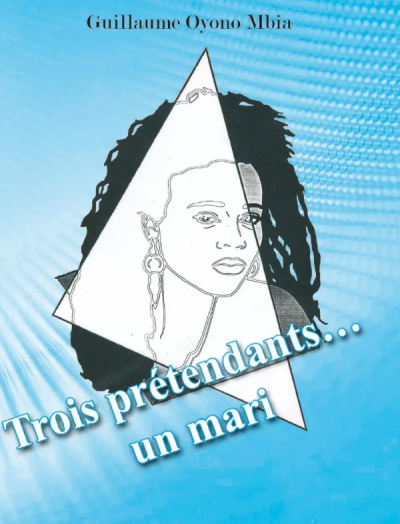
1790486918225.png

Playwright: Guillaume Oyono - Mbia

Setting: Traditional village of Mvoutessi in Cameroon.

Year: 1960.


At first the book was written in French in 1960 and first publicly staged in Yaoundé, Cameroon 1961. It was translated into English by the author and given its first performance in Britain at University of Keele in February 1967.

Three Suitors, One Husband (originally published in French as Trois prétendants... un mari in 1968) is a celebrated comedic play by Cameroonian playwright Guillaume Oyônô-Mbia. Set in the rural village of Mvoutessi in Cameroon, the play uses humor and satire to explore the clash between traditional African customs and modern Western education, specifically regarding women's autonomy and the practice of bride price

CHARACTERISATION​


1)ATANGANA
2)
ABESSOLO,​
Atangana`s father
3)ONDUA,Atangana`s brother
4)BELLA,Atangana`s mother
5)
MATALINA,​
Ondua`s daughter
6)OYONO,Atangana`s son
7)MAKRITA,Atangana`s wife
8)JULIETTE,Atangana`s daughter
9)MBARGA,The village headman
10)MEZOE,RELATIVE
11)KOUMA,
JULIETTE`S COUSIN​
12)OKO,HER FIENCE
13)NDI,FIRST SUITOR
14)MBIA,
THE SECOND SUITOR​
15)TCHETGEN,THE THIRD SUITOR
16)
SANGA-TITI,​
THE WITCH DOCTOR​
17)ENGULU,MBIA`S DRIVER


GENERAL SUMMERY
clip_image001.gif
The author uses Juliette as a main character of the play. Juliette is a student who has been away from the village studying at Secondary School in Libamba. While at school, she meets her fiancé

who is supposed to be introduced to her parents and other relatives. She is expected to arrive home at any time.

JULIETTE ARRIEVES HOME​

All the relatives are eager waiting for her. At home, the relatives choose two suitors and receive the bride price. Her coming is a great pleasure to the relatives since they want her to get married.
The first suitor is called Ndi. He is a peasant and has already paid 100,000 francs as dowry.
The second suitor is called Mbia, who is a senior civil servant. Mbia is going to pay 200,000 francs as a bride price. All villagers are already supporting Mbia since he is wealthier than a peasant (Ndi). And will help them in so many things, including solving their problems when they are arrested for engaging in illegal business. Mbia is expecting to happen at any time, a good coincidence for Atangana. As Juliette arrives, she is surprised or rather shocked to hear that they want her to get married.


Juliette is shocked because of three things. First, she wants to continue with further studies. Second, she has not been consulted on matters that concern her and her life like marriage. According to her, she is supposed to be consulted first instead of the family deciding on her behalf. That is her right and the family has not that right. Third, she has got a fiancé of her own choice called Oko.
As she argues against the family and demanding to be consulted, the family and other relatives are shocked since she is doing what is contrary to the tradition. In her society, it is men who decide whom a girl should marry. They have their own set of priorities or criteria to judge as far as the marriage concerned. As the argument goes on Mbia arrives. Everybody is excited and Mbia seizes to impress them by behaving like a great man.


With a lot of pomposity, Mbia pays the bride price, 200,000 francs hand it to Mbarga. After paying, he majestically says ha has to leave since he has to attend a cocktail party ay a Secretary of state`s private residence this evening… Instead of going to the party, he goes to drink Arki (a traditional illegally distilled liquor with high alcoholic content) at Mbaga`s house.
In fact all family members want Juliette to marry Mbia because he is seen to be wealthy as he introduces himself with a lot of majesty. But Juliette clings to her firm stand, she love Oko, a student and she want to marry only him. To archives her goal she secretly takes the bride price paid by Ndi and Mbia (a total of 300,000 francs) and gives it to Oko, her fiancé. Oko hesitates, but she convinced him to take the money since it is going to be paid back to the family. Oko accept the idea after understanding and becomes happy to see that Juliette is facilitating the marriage between her and him, because he also loves her so much.

As the money disappear, Atangana gets a lot of panic, the whole family is also in panic. They first convince Ndi to pay 200,000 francs so that they can pay it back to Mbia and take
Juliette Ndi Refuses and threatens to take them to police. This intensifies such panic that, they then go to Mbia (which is now drunk ) to convince him to pay another 100, 000 francs so that they can re pay Ndi and allow him to take Juliette. Mbia also becomes furious and, like Ndi, threatens to call Police.
Finally, Mbaga suggests that a witch doctor be called so as to find out through magic, who has stolen the money. The witch doctor is Singa –Titi, but he is a cheat and a thief. Sanga-titi does not help them find the thief. He starts threatening them with evil sprits and death so that they can give him a lot of animals as gifts. He tells a lot of lies at the same time he continue to demand a lot of things from the villagers. After discovering his lies, the villagers become angry and chase him away. So the problem of money is not solved yet since the witch doctor is merely scoundrel.


Blames continue raining on Juliette from the family member. Later Juliette suppresses them by saying she is ready to marry the first man who gives 300,000 francs as a bride price since she is sure that it will be Oko. Then she insists that the man should pay that amount and no more. she says so because she knows Oko cannot afford buying so many presents that are usually demanded by the relatives.
Then, Tchetgen, a trader arrives and the villages convince him to pay 300,000 francs. As they are still bargaining, Oko arrives and dressed like a great man.


He decides to show the villagers that they must listen to the view of the girl who is get married. This causes conflict with Atangana, and even other insists that Juliette must be asked, and finally Juliette asked which suitor she wants. She categorically chooses Oko. Oko pays the bride price and every one celebrates the wedding.
In deed where there is the will there`s a way. Juliette and Oko win the race to ward their desire marriage through a lot of challenges. Entanglement e.t.c. Determination, confidence, cooperation between her and Oko and patience leads to the attainment of highly intended goal.


CHARACTERIZATION

1. ABESOLO​

He represents the oldest generation. He is a father of Atangana and Ondua. He believes that the world is changing and school destroys the young. According to him the girls should not be sent to school. He defends traditions.​

He looks at women as inferior people who are not supposed to consult when it comes to important matters like marriage. He defends the old taboos, like prohibiting women and young men from eating the vipers, instead be eaten by male elders.
He wants to stop the marriage between Juliette and Mbia, since Mbia is closely related. He accept breaking the traditional norms by accepting Mbia to marry Juliette. He is against school but proud of Juliette`s success in school and hence wants higher bride price. He is against the new changes but expects to benefit from them. He is also conservative.
 
Last edited:

2. BELLA​

She is Abesolo`s wife. She is strong supports traditional ways of life even on the questions of women. She completely accepts her inferior position in the society and agrees with her husband in all ways, for example, she supports him when he says “ you must beat your wives”.
She also complains that some women are breaking the traditional taboos. She is shocked by the way Juliette behaves before her father. She reacts toward Juliette “Juliette! A girl should never speak when her father’s speaking”. She supports the ideas that a girl should marry for the goods of the family and not for her personal interest.
She wants Juliette to make them rich by marrying Mbia. According to her, a girl is not permitted to fall in love out of her will, it is the community`s concern. Despite her strong support on traditions, Bella is also affected by new values, since she is proud when Juliette succeeds and she will marry a “real white man”.
She is like Abessolo that she is contradictory character, since she wants Juliette to follow traditions while she is appreciating new ways of life. She remains a traditional woman, a shadow of her husband doing everything to please him. The ideas from her husband is enough, she doesn’t need to give her own ideas.

Ondua​

He is the son of Abesollo and Bella. He is more lazy and much more drunkard. He spends all his life drinking palm wine or ark. He is always arrested by the Police for being drunk and disorderly. He is always thinking of drinks before anything else. Even when Atangana concludes the marriage, Ondua cries out “Ah Atangana! What about the drinks?”

He is depends entirely on his wife, Monica. She does all the work on the farm. So he is living parasitic life. He is very strange, despite depending on her wife, she still despises women. He says “No sensible man should west his time trying to reason with them”.

Like other man, Ondua opposes secondary school since it corrupt girls. He is proud of his daughter Martalina for following traditions.. He is also having contradictions since he wants Matalina to marry a rich suitor who follows new values.

AtanganA​

He is the father of Juliette and Oyono. He is the son of Abesolo and bella. Like other men, he believes that men are superior to women. According to him, women should do all the working in the farm. He is ignorant and oppressor, he becomes angry when his wife comes late from the bush, wants her come early home and cook for him. He believes that her daughter should make him become rich. So he wants her to marry a parson who gives the highest bride price.

After the payment of bride price, he demands fantastic things, such as: A radio with set with gramophone, a bicycle, 4 suits, 5 blankets, a sewing machine, and 10 loin clothes, kitchen ware. Others are 10 sacks of rice, 4 oxen, 15 sheep, 10 goats, 20 pigs, and thirty cases of red wine.

He sees Juliette`s education as an investment. He says “when I sent her to Secondary School, I was just saying to everybody “someday” I will benefit from that” He is angry when Juliette refuses to marry Mbia. He regrets for having spent all cocoa money to educate her. He wants to use the bride price to get his son, Oyono, a wife.

At the beginning Atangana wants to consult his daughter about her marriage, but is prohibited by Abesollo who thinks that this is stupid. He has illusions that Juliette will agree to marry such a great man, but is shocked to see her refusing. He believes Sanga-Titi even when he knows thet he is telling lies, and continue give him more things with out realizing tat he is just exploiting them


Makrita​

She is Atangana`s wife, and is just like Bella since she believes that women are designed to serve and obey men. She accept women`s inferior position in the society. She is also a woman of contradiction. First she takes Ndi to be good suitor since she helped in the farm. But when she is told that Mbia is now a suitor she immediately follows what has been decided by men.

She is very hard working, spending all day in the farm. She is not pleased with the way Juliette speaks when her father speaks. Attangana blames her that she has destroyed Juliette.

Like other peoples in the village, she has also been affected by the new values. To her money proves love and the most important suitor is the one who is wealthy. She even want to know Oko has a car or not. To her men are superior and girls have no freedom.


MBARGA

He is a village headman. He talks of his importance, “A great man like me! Is there any one in the village who doesn`t know that I am a very wise man?” He demands that the villagers should recognize his greatness hence he has been blessed by the dead fathers of the village in a dream. He is not afraid of Mbia, hence he is nearly as big as Mbia.
 
He is proud and arrogant of his position. He wants to be introduced to Mbia as the village headman. He later introduces himself.

Mbaga is Polygamist; he has twelve wives and think of marring another. He also uses his position in corrupt way. He distills “Arki” in his own house and he is not arrested. He shows a lot of concern during Juliette`s marriage, hence he expected to benefit from it.

He is very cunning; he flatters Mbia so much so that Mbia goes on giving him more battles of wine. He gives a crazy idea of taking Juliette around all offices to find a suitor. He is so ignorant that he cannot easily recognize Sanga –Titi`s lies hence he gives him two rams so that he can purify the village. He is also fooled into believing that Oko is a great man, greater than Mbia.

Like other elders, he supports traditions. He is against Juliette being given a chance to speak. He convinces members to allow Mbia to marry Juliette since he is an important man in the government.


SANGATITI​

He is a false Witch doctor. He is very cunning and interested in getting rich by cheating the villagers, so he takes advantage of their ignorance. He uses his mirror, antelope horns, etc. to fool people.

First he listens to what the villagers say and then says as if he knew it before. His mirror tells him nothing. He hears what Atangana says about the stolen money and pretends to have discovered it before and the villagers are impressed.

He creates threats and fear among the villagers. He is therefore, a corrupt man who uses villager's ignorance to exploit them. When they realizes him, they chase him.


MBIA​

He is a second suitor who is a great civil servant. He pompously introduces himself that he works in a large office and the secretary of state known him personally. He is accepted to marry Juliette even if he is closely related to her. He pays the bride price of 200,000francs.

He is polygamist, as he has eight wives and Juliette is going to be the ninth. He is also liar, he gives the villagers a lot of lies when the villagers demand a lot of things from him. He says he has to leave since he has to attend a cocktail party at the secretary of state`s private residence, but spends the rest of the day drinking Arki at Mbaga`s place.

Mbia is arrogant and lacks respect to the family; hence he wants to pay and leaves at once. He has a petty dream of becoming a great man in the state. He is rejected by Juliette. He becomes

angry and threatens the villagers of bringing ten Police commissioners to come and deal with them. Mbia is corrupt and is part of the ruling class in town who get rich from villagers.


JULIETTE​

She is a daughter of Atangana and granddaughter of Abessolo. She represents the educated young girls who have begun going against the traditional values. She has been studying at Libamba Secondary School and has passes the exam, hence everybody is happy and proud of her success.

She has fallen in love with fellow student Oko, who she wants to marry. The family chooses her the suitors, that is Ndi and Mbia, and they want to her to marry Mbia because he is great man. To attain her goal she decides to take the money secretly from her father Atangana and gives it to Kouma so that Oko can use it as a bride price.

She fight for freedom of women and the chance to express herself confidently. She identifies her position, that she needs to be free and sticks to Oko, her choice. She is an intelligent girl, and she is fighting against oppression of men ageist women.

She wants to teach men that women are also important in the society, since they can make wise decisions, which might lead to development. Juliette stands as an icon for necessary changes in the society, which is women emancipation


OKO​

He is a schoolboy who wants to marry Juliette. He is not accepted by Juliette`s family since he is student and hence poor. He becomes angry when he hears that Mbia is the chosen suitor. He is given money by Juliette, stolen from Atangana. He is educated and is after changes, and he is against traditions. He doesn`t want to see women being oppressed, that is why he wants to fight for Juliette`s freedom to speak. He comes to Atangana`s home like a great man and pays 300,000 francs. He successes to attain his goal, by taking the advantage of the ignorance of the society.

DISCUSSION​

“Choose only two characters from this book you have read and show their similarities and differences”.

THEMATIC ANALYSIS​

i. Tradition and Family
 

Economy​

The people depend on agriculture as the economics of the village. The main crops are plantation, corn and groundnuts. Also they have their have their own crafts, for example Atangana is making a basket while Abesolo is sculpturing or carving.

Women are the main producers in the farms, for example Atangana`s wife has not come back early from the farm. She arrives from the farm with a basket full of cassava, banana, sugar cane, etc.

Religion.​

Most of the villagers still keep many traditional beliefs. They believe in their gods and spirits for example owls and chimpanzees represent the evil spirits of the past. They also believe strongly in the power of their dead ancestors who watch over the society from the spirit world.

Bride price.​

Men are supposed to pay bride price so as to have wife. Thye girl for whom higher bride price is paid is valued more.

Taboo​

Women are not allowed to eat vipers and young men eat only by special permission. For example, Mbaga complains of the young people Belinga and Owono because of eating the viper without elder`s permission.

Traditional Dances​

There are dances called “Nyeng” which are performed by Mezoe, Oyono and Ondua.

Meetings​

People seem to have tendency of meeting to discuss important issues like marriage. The drum Is used for calling people. For example, when mbia arrives, the drum is beaten to invite people.

Polygamy​

Mvoutessi men are polygamous and this makes women become more inferior. For example, Mbia has eight wives and if he marries Julliette she will be the ninth wife.

Eating Etiquette​

The author shows that traditionally children are supposed to observe eating manners. When eating the elders are heard scolding the children who don’t eat properly.

Position of women​

Women occupy an inferior position in the society.

Firstly, women do nearly all work. Most men do not go to the farm except few like Ndi. Women are also expected to come back home early after shamber work and do the cooking. When they

come late, even if they have been working, they are trouble. For example, Makrita is still in the shamba but Atangana is complaining.

Secondly, women have no say in the society, even on matters that concern their life. For example, Julliette is not asked about the man she wants to marry.

Thirdly, traditionally, girls for whom a high bride price is paid are respected more because high bride price is the recognition of obedience and hardworking.

Last but not least, women are beaten in the society so as to make them obedient to their husband. Abesolo, for example is complaining because things are changing and sometimes women are asked for an opinion. He insists “I warn you again, you must beat your wives! yes beat them!

And treat your daughters just the same way”

Family and Community​

An individual is supposed to be loyal to the family and community at large. Individual`s wishes are not such important. Bella for example, tells Julliette, “since when do girls fall in love without the permission of their family?”. Therefore, love and marriage are the matters to be decided by the family in accordance with the norms and values of the community.

Her bride price is to be used by Oyono, her brother to pay the bride price for the wife she want to marry.

Change​

Although the villagers are still leading a large traditional life, the coming of the Europeans has introduced many changes into the society.

Education changes the altitude of the young. They start go against their traditions. Julliette, for example, goes against the traditions like the bride price. To her, bride price has no great meaning, that is why she even steals the bride price and give it to Oko.

She also, dares to speak before men like her father Atangana which is contrary to the norms of the society
 
CONFLICTS.

This refers to the misunderstanding or collision of ideas, viewpoints or opinions within a person, between or among groups of people in the society. Like other plays, in this play there are several conflicts as analyzed below.


Ø INTRAPERSONAL CONFLICT.

o This occurs within a person. It is manifested within the following individuals.

o Juliette; She suffers an intrapersonal conflict because of outdated customs in her society that forces girls to marry men who are not of their choice and without consultation. As a result she steals the money paid by the previous suitors and gives it to Oko (whom she loves) and the two get married.

o Atangana; He suffers an intrapersonal conflict after discovering the theft of his money. The conflict grows worse when both Mbia and Ndi threaten to bring the police to arrest him. As a result he calls the witchdoctor to recover the lost money but he fails. Finally, he receives the money from Oko as a solution to his problem.


Ø FAMILY CONFLICT.

o Juliette with her family.

This occurs when she refuses to marry the rich man they have chosen for her. It intensifies as she argues with the family contrary to their expectation since women do not speak in Mvoutessi. It ends when she marries Oko who pays 300,000/=francs

o Mbia and Juliette’s family.

This occurs when they tell Mbia to add some more 100,000/= francs for Juliette. He demands his money back and threatens to bring the police.

o Ndi and Juliette’s family.

This occurs when they tell Ndi to add some more 200,000/= francs for Juliette. He demands his money back and threatens to bring the police.

Ø CULTURAL CONFLICTS.

There is a conflict between traditional culture and modern culture. Young Generation represented by Juliette, Oko, Kouma, Belinga and Owono embrace modernism by going against the traditional culture that forbids them to do certain things like eating vipers, freedom of choice, decision making and speech. On the contrary there are elders like Mbarga, Atangana, Abessolo, Bella and Ondua who uphold traditionalism. They condemn new ways of life and think that things are falling apart since youngsters no longer listen to elders as they are expected to do.

Ø SOCIAL CONFLICT –

This occurs between the villagers and the witchdoctor Sanga-titi. It occurs when the villagers discover that Sanga-titi is not only a liar, but also a robber and is not able to recover the lost money. He just keeps on robbing them and threatens to bewitch them. They beat him up and chase him away.

Ø POLITICAL CONFLICT.

There is a conflict between the Rulers and peasants (villagers). This occurs when the police keep on beating the villagers for not paying the taxes and arresting them for being drunk. They want Mbia to marry Juliette to help them.

AWARENESS.​

Ø It is a state of being conscious about what is going on around you. This is a vital tool in so far as the liberation of the oppressed is concerned. Awareness is manifested in the following aspects.

Ø Kouma is aware of Sanga-titi’s lies. He knows where the money is but Sanga-titi keeps on telling lies. Kouma contradicts him on spot and helps all the other villagers to discover that Sanga-titi is a liar and a robber.

Ø Juliette is aware of her rights like freedom of speech, decision making and choice. She doesn’t want to be considered inferior that’s why she says “but I’m a free person. Pg 31

Ø Kouma and Oko are aware of the fact that women are important people in the society and should be respected. They teach the villagers a lesson by giving Juliette a chance to choose her own suitable suitor who becomes her husband.


THE INFLUENCE OF MONEY AND POWER.​

In this society everybody thinks that money is a solution to every problem and is the source of happiness. As a result most people engage in different legal and illegal activities to get money. The following scenarios are just few cases in point.

Ø They cultivate cash crops like cocoa in order to get money.

Ø Some distill illegal liquor (Arki) to get money. Examples are Mbarga and Monica Ondua’s wife.

Ø Marriage has also become a business. Parents want their daughters to marry rich men so that they can get money. E.g. everybody wants Juliette to marry Mbia since he brings a lot of money.

Ø Love is based on money. In this society the girl for whom the highest bride price is paid is considered to be loved and is respected. Matalina says to Juliette “How could a girl refuse a man who loves her enough to pay 200,000/= francs for her?

Ø Sanga-titi is corrupt and wants to get rich easily through people’s ignorance. He uses tricks and lies to get more money.

Ø Money leads girls into polygamy. Some people use money to marry as many women as they please. Mbia has 8 wives and wants to use his power and money to win Juliette’s love. The deputy of the secretary of state also has 12 wives.

Ø Mbia is opportunistic. He treats people dearly (giving them drinks and money) to influence them to give him Juliette. When it fails he uses his power to threaten them that he will bring the police to arrest them.

Ø Money and power make people arrogant and boastful. Mbia is arrogant because of his money and power. He accuses the villagers that the roads are poorly kept and the houses have not been whitewashed in expectation of the honour of his visit. Mbarga is also arrogant because of his power as a village headman. He dictates respect from people by using his authority.


NEPOTISM/FAVOURITISM.​

This is a common phenomenon in Africa now. People are treated on the basis of whom-you-know and not what-you-know. For example in this society everybody is in favour of the Civil Servant because on top of the bride price they expect to be favoured in other spheres as well, such as;

ü To get medals and gun permits. They say it is so difficult to get it when you do not know the right people in the government.

ü To avoid frequent beatings from police. For example Mbia discovers that the people of the village are distilling illegal Arki but takes no action since he wants to become their in-law.


INFLUENCE OF EDUCATION.​

Education is a necessary tool for social change. If used positively it acts as a medium for transforming a traditional society into a modern one. In this society education has been used positively to bring about social changes in the following ways:

ü It has brought awareness to young people who acquired it. Unlike Matalina who has not gone to school Juliette knows her rights as a girl. She demands her freedom of expression, choice and decision making.

ü Oko and Kouma are also aware of women rights. Although they come from the same male dominated society, they don’t like the way women are mistreated. They use their education to bring changes.

ü Education increases the value of an individual. Most people who are educated are considered valuable compared to uneducated ones. Villagers believe that since Juliette is educated they should demand high bride price for her.

ü Education has brought about cultural change. Young people who have acquired education have begun to question certain traditional values. Even elders believe that it is due to schools that these changes occur though they put it in a negative way by complaining that” schools have corrupted everything”


CLASSES IN THE SOCIETY.​

The play depicts different classes of people in his society. There are several classes that can be classified in the following categories.

Ø Educated vs. uneducated

There is a class of educated people represented by people like Juliette, Oko and Kouma and that of uneducated represented by people like Mbarga, Matalina Abessolo, Atangana etc. Their differences are manifested even in the way they look at things.
 
Ø Traditionalists vs. modernists.

There is also a class of those who wish to see the traditional values of the society whether good or bad upheld at any cost and those who see no need to continue with outdated customs. People like Mbarga, Abessolo Atangana Ondua etc uphold traditionalism while people like Belinga, Owono, Juliette, Oko and Kouma embrace modernism.

Ø Rich vs. poor

There is also a class of rich people (the ruling class) like Mbia who enjoy the national cake and traders like Tchetgen while the majority like the villagers (peasants) are suffering from poverty expecting to get rich when rich men come to marry their daughters.

Ø Town dwellers (townies) vs. Village dwellers (villagers.)

The life of the people in town is different from those in the villages. Mbia despises the villagers. We are told that even Engulu a mere driver despises the villagers since he comes from town. Also people in the village even distil and drink illegal drinks like “Arki” while those from the city enjoy strong bottled drinks.


HYPOCRISY.​

Many people in this society seem to be affected by hypocrisy. They do or say whatever might earn them a favour from somebody. They even contradict their own statements for the same reason.

Mbia is a hypocrite. When he wants to marry Juliette he praises the villagers and even doesn’t take action when he discovers that they conduct illegal business by distilling Arki. When his plans finally fail he changes his opinion and accuses them of the same. This is high level of hypocrisy.

Mbarga is a hypocrite. At first he praises Mbia and favours him for Juliette and they kick out Ndi. When the money is stolen he praises Ndi to soften him to add 200000/= francs so as to cover up the loss. He even pretends to weep, mourning the death of Ndi’s father who after all isn’t dead yet. This is hypocrisy.

Elders like Abessolo are hypocrites. They condemn secondary schools for polluting girls yet when it comes to the issue of marriage they want to benefit from the same education by demanding high bride price because Juliette is educated.


STRUGGLE FOR CHANGE.​

Ø The play tries to show the areas that need reformation and urges the society to make the necessary social changes. There are outdated customs which need to be reformed like: forced marriage, bride price, women beating, taboos, superstitious beliefs and polygamy. There are also good ones that we may cherish such as traditional dances and eating etiquette.

Ø Also education seems to be a great agent of change that needs to be embraced. Men should change their mentality by sending girls to school since they are capable of contributing to societal development.


OTHER MINOR THEMES INCLUDE​

Betrayal.

Juliette’s family betrays Ndi by taking more money from Mbia while they know that Ndi has already paid for her.


Illiteracy.

Many people portray a picture of illiteracy. That’s why Oko, Kouma and Juliette take advantage of their illiteracy to facilitate the marriage between Oko and Juliette.


Irresponsibility.

Mbia and Mbarga are irresponsible leaders. Despite knowing that distilling “arki” is illegal they take no action.


Love

There are two extremes of love portrayed in this society. There is True love as exemplified by Juliette and Oko and hypocritical/untrue love as shown by the polygamists.

MESSAGE

Ø Bride price, polygamy, superstition, forced marriage and spouse battering are outdated traditions they needs to be discouraged.

Ø People should use their education positively to bring about social change.

Ø Hypocrisy is not good in any ideal society.

Ø Witch doctors are liars and robbers.

Ø Love and not money should be the determinant of true marriage.

Ø Illiteracy is an obstacle to development.

Ø Both boys and girls should be given equal right to education.

Ø Food taboos should be discouraged as they deprive women and children of required nutrients.


RELEVANCE

The play is relevant in a number of ways.

Ø Polygamy is still a problem in most African societies and among the Moslems.

Ø Bride price is still a common custom in many African societies and is a source of conflicts in marriage among the youngsters and elders.

Ø People still believe in witchcraft and superstition as a solution to their problems.

Ø There are people who earn a living by conducting illegal business like distilling “gongo”.

Ø Many people misuse their money and power for private gain.

Etc